
 SRPSKI
 ENGLISH
Winter Equipment Guide for Rental Cars
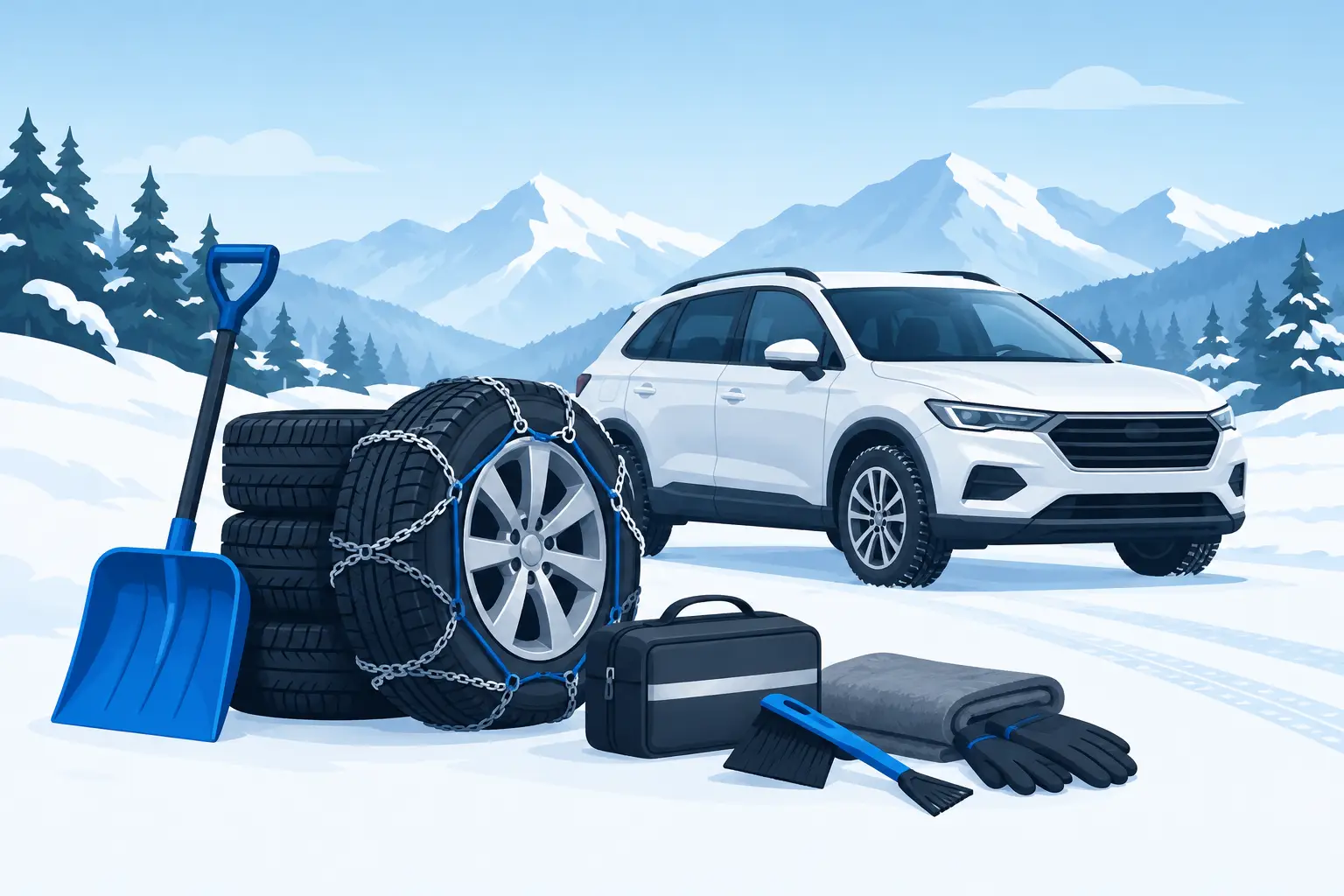
You have landed in Niš, picked up your reserved rental car, and are planning a trip to Kopaonik, Stara Planina, or further across Serbia. Before setting off, check the tires and ask what additional equipment is available in the vehicle. This winter rental car equipment guide will help you check everything that genuinely affects your safety, costs, and peace of mind when the weather is not on your side.
Winter driving does not become challenging only when the roads are completely covered in snow. Wet roads at low temperatures, icy patches in shaded areas, fog, and slushy snow can all affect a car’s handling long before you reach a mountain pass. With a rental car, you have the advantage of choosing your vehicle category and additional options in advance, but it is useful to know exactly what is included and when extra preparation is necessary. Winter Rental Car Equipment Guide: What to Check First The first question is not simply whether the vehicle has winter tires, but whether it is suitable for the route you are planning. For city driving on cleared streets in Niš and open main roads, a properly equipped passenger car with quality winter tires is generally sufficient. If you are travelling to a ski resort, a holiday home, or along roads where snow tends to remain for longer, choosing the right vehicle and equipment requires more attention.
In Serbia, winter equipment is required from November 1 to April 1 when there is snow, ice, or black ice on the road. During this period, winter tires must be fitted on all wheels, with a minimum tread depth of 4 mm. Snow chains must be kept in the vehicle when travelling on roads where their use is indicated or where severe winter conditions are expected. Regulations and road signs may vary depending on your route, so check road conditions immediately before departure.
When collecting your vehicle, take two minutes to carry out a visual inspection. Check the tire markings, tread condition, and whether snow chains are available in the trunk if they are included in your rental agreement or required for your route. You do not need to be a mechanic: if anything is unclear, simply ask the staff for a brief explanation. This is much easier than having to look for assistance at the side of the road while snow starts falling. Winter Tires Are More Than Just a Legal Requirement Winter tires feature a rubber compound and tread pattern specifically designed for low temperatures. They are not intended only for driving through deep snow. Their main advantage is better grip on cold and wet asphalt, where summer tires can lose stability even at relatively moderate speeds.
That is why you should not assess the need for winter equipment based solely on the weather forecast at your departure location. The roads in Niš may be dry, while mountain resort access roads, bridges, road cuttings, and shaded bends just a few dozen kilometres away may be covered in ice. If your route involves changes in altitude, expect different conditions from those you experience in the city.
When renting a car, choosing the right vehicle class is also important. A small economy car is practical and affordable for city errands or a trip for two passengers with light luggage. For a family, several suitcases, and a longer journey, a larger model offers greater comfort. An SUV can be a good choice when you expect snow and uneven access roads, but a higher vehicle does not replace careful driving, good tires, and a sensible speed. Four-wheel drive helps with traction when moving off, but it does not magically shorten braking distances on ice. Snow Chains: When Do You Really Need Them? Snow chains are not equipment that should be fitted preventively on dry asphalt. They are used on snow-covered sections of road, in accordance with road signs and the instructions for the specific vehicle model. Once the road has been cleared, they should be removed, as driving with chains on dry surfaces can damage both the tires and the road.
If you are using snow chains for the first time, do not wait for a blizzard to figure out how they work. When collecting the vehicle, ask about the correct size, which wheels they should be fitted to, and the basic installation procedure. Practising on a dry, flat surface while following the manufacturer’s instructions can save you a lot of time. Bring gloves, a flashlight, and something to kneel on — small items that become extremely useful when the asphalt is wet and cold.
However, snow chains are not always necessary. If you are driving around the city or on well-maintained roads and the forecast does not predict snow, they will probably remain in the trunk. Their purpose is to prevent you from being caught off guard during the last few kilometres to your accommodation or on a designated mountain road section, not to encourage driving in conditions beyond your experience. Equipment That Is Often Overlooked Visibility is just as important as traction. Before your journey, check that the windshield wipers are in good condition and that there is enough windshield washer fluid suitable for low temperatures. A dirty windshield, headlight glare, and fog can reduce visibility faster than drivers expect.
It is also a good idea to have an ice scraper and snow brush in the vehicle. Snow should be cleared from the entire car, not just the windshield. Snow accumulated on the roof can slide forward when braking, while snow covering the lights reduces your visibility to other road users. Before setting off, clean the headlights, rear lights, mirrors, and license plate.
For longer winter journeys, it is also practical to carry a few personal essentials: a fully charged phone, a car charger, warm clothing, water, and some food. This is not excessive preparation, but a sensible precaution in case you have to stop because of traffic congestion, roadworks, or a closed mountain pass. Travel times can easily increase during winter, especially on Fridays and weekends when many people head towards the mountains. Insurance and Rental Agreement: Read Before You Set Off Winter equipment improves safety, but it does not eliminate the need for careful driving. Your rental agreement and selected insurance coverage determine what happens in the event of damage, an accident, or roadside assistance. Before signing, check the deposit amount, whether an excess applies