
 SRPSKI
 ENGLISH
Best Car for Long-Distance Highway Driving
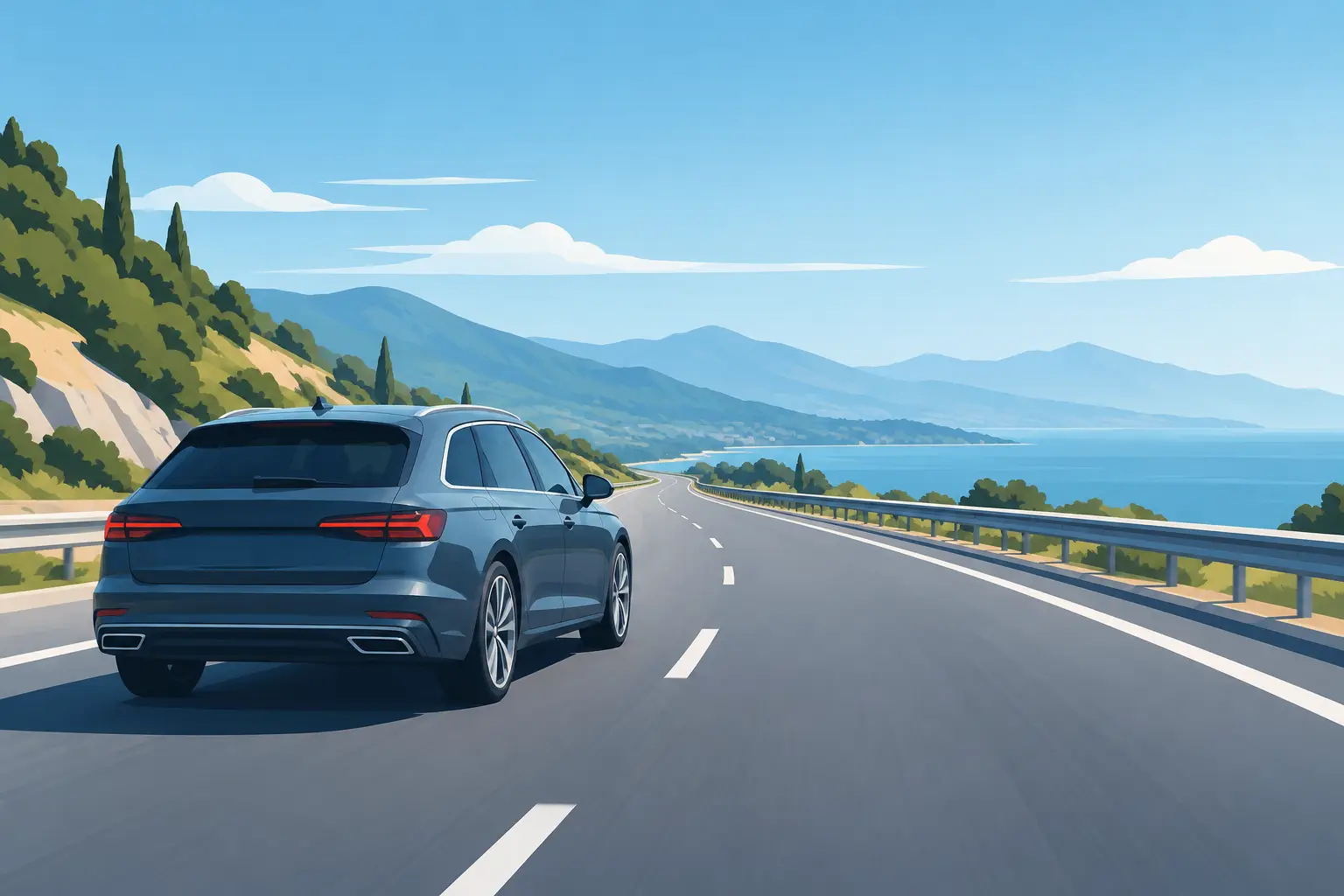
A two-hour drive to Belgrade may seem short on a map, but in a car with a noisy cabin, uncomfortable seats, and insufficient power for overtaking, it can quickly become exhausting. That is why the best car for highway driving is not necessarily the biggest, most expensive, or most fully equipped one. It is a vehicle that gets you to your destination feeling refreshed, maintains speed smoothly, offers reasonable fuel consumption, and provides a sense of safety when traffic is heavy or weather conditions are poor.
For travellers setting off from Niš towards Belgrade, Novi Sad, Zlatibor, Skopje, Sofia, or further across the region, choosing the right vehicle directly affects both the cost and quality of the journey. A good highway car does more than simply provide transportation. It makes the difference between a journey you have to endure and one you can enjoy without unnecessary stress. What Really Makes a Car the Best Choice for Highway Driving? In city driving, compact dimensions and easy parking are the most important factors. On the highway, priorities are different: stability at higher speeds, long-distance comfort, good visibility, and sufficient engine power for safe merging and overtaking. A vehicle that is perfect for everyday trips to the supermarket may not be the right choice for spending four or five hours behind the wheel.
Start by paying attention to the driving position. The seat should provide good lateral and lumbar support, while the steering wheel and seat should offer enough adjustment to prevent an uncomfortable posture. After several hundred kilometres, this is precisely where the difference between an average and a good car becomes noticeable. Cruise control also reduces driver fatigue on open roads, especially when the route is long and traffic conditions are relatively consistent.
Sound insulation is equally important. At speeds of 120 or 130 km/h, wind, tire, and engine noise can quickly become tiring for both drivers and passengers. Larger, more stable models generally offer a quieter cabin, but a well-maintained compact car can also provide a comfortable experience on short and medium-distance journeys.
Engine power does not mean you need a sports car. What you need is enough power reserve for smooth acceleration when entering the highway, overtaking trucks, or driving uphill with a fully loaded trunk. A petrol engine with moderate performance can be perfectly sufficient for one or two passengers, while families carrying more luggage will often appreciate a more powerful engine and a larger vehicle. Comfort, Safety, and Fuel Efficiency Must Work Together One of the most common mistakes is choosing a rental car based solely on its daily rental price or fuel consumption. Affordable car rental is important, but a vehicle that is too small for the number of passengers and their luggage can easily turn savings into unnecessary stress. On the other hand, there is no reason to book a large SUV if only two people are travelling with two small suitcases.
When choosing a highway rental car, look for a balance between the following features:
- Stable handling at higher speeds and reliable braking performance.
- Comfortable seats, air conditioning, and sufficient cabin space.
- Fuel consumption that suits the length of your planned route.
- A trunk that can accommodate your luggage without having to pack everything up to the roof.
- Modern safety features, such as parking sensors, a rearview camera, or lane-keeping assistance, where available. Safety systems are not a substitute for driver attention, but they can provide valuable assistance. Lane departure warnings, automatic emergency braking, and blind-spot monitoring are particularly useful on long journeys, when concentration naturally begins to decline. Nevertheless, the most important safety features remain a well-rested driver, properly fastened seat belts, and regular breaks.
Fuel consumption becomes particularly important when planning multiple border crossings, visiting several cities, or completing a return journey within a short period. Diesel and hybrid vehicles often have an advantage on longer routes, but the final calculation depends on the specific model, fuel prices, mileage, and driving style. When renting a car, it is more useful to ask about its real-world highway fuel consumption rather than relying solely on the manufacturer’s figures. Which Vehicle Class Is Right for Your Journey? A small economy car can be an excellent choice for one or two people travelling without much luggage and looking to keep costs low. Its main advantages are a lower rental price and reduced fuel consumption. The trade-offs are less space, more limited sound insulation, and a less stable feel compared with larger models, particularly when the vehicle is fully loaded.
The compact class is the most practical choice for many travellers. These vehicles generally offer enough room for four adults on shorter journeys, a decent-sized trunk, reasonable fuel consumption, and easy handling. If you are travelling from Niš to Belgrade, exploring Serbia, or visiting nearby destinations across the region, a compact car is often more than sufficient.
Sedans and estate cars have an advantage when comfort and luggage capacity are top priorities. Their longer wheelbase generally provides a smoother ride, while the trunk can accommodate larger suitcases, business equipment, or baby strollers more easily. Estate cars are particularly practical for families, offering plenty of space without necessarily requiring the higher driving position or increased fuel consumption that an SUV may bring.
An SUV makes sense when travelling with family, carrying more luggage, or continuing from the highway onto local and mountain roads. The higher seating position improves visibility, and the cabin is often more spacious. However, an SUV is not automatically the best choice for everyone. It may consume more fuel, cost more to rent, and be unnecessarily large if most of your journey takes place on the highway.
For business travellers, making a good impression upon arriving at a meeting can also be important. In this case, a comfortable sedan or a well-equipped SUV can be a practical solution, provided it matches the actual number of passengers and the expected mileage. The right choice is a vehicle that looks professional while allowing you to arrive at your meeting without feeling exhausted. Check These Practical Details Before Booking The car model matters, but rental conditions can be just as important for a stress-free journey. If you are planning to drive outside Serbia, permission to cross the border must be arranged in advance. Do not leave this until the day of departure, especially if you are collecting the vehicle after landing or setting off early in the morning.
Check how many people will be driving the vehicle. If you plan to take turns driving on a longer route, an additional driver must be included in the rental agreement. This is a simple detail that makes travelling easier and provides greater legal security in case of unexpected situations. Families should arrange an appropriate child car seat in advance rather than relying on last-minute arrangements.
Before departure, check the location of the spare tire or tire repair kit, mandatory equipment, fuel level, and vehicle documentation. Adjust your mirrors, navigation system, and seat while the vehicle is stationary. Position your phone so it does not distract you from the road, and distribute your luggage securely — heavier items should be placed lower down and closer to the rear seatbacks.
If you are arriving at Constantine the Great Airport, arranging vehicle collection in advance saves time and eliminates the need for additional transfers. Niš City Rent a Car operates 24/7, making it a convenient solution for late arrivals, early flights, and travel plans that change at short notice. How to Stay Fresh Behind the Wheel Even the most comfortable car cannot compensate for fatigue. On longer journeys, take breaks before you experience a significant drop in concentration. A little stretching, some water, and a few minutes outside the cabin can often be more beneficial than another coffee at a petrol station. If you are travelling with another driver, agree on when to switch before departure rather than waiting until someone is already tired.
Do not try to make up for lost time by driving aggressively. Higher speeds increase fuel consumption, reduce your reaction time, and make the journey more exhausting. Smooth driving, maintaining a safe following distance, and planning realistic breaks will usually help you arrive just as efficiently, but feeling considerably less tired.
The right car for highway driving is the one that matches your route, number of passengers, and preferred travel style. Choose a vehicle based on your actual needs, leave some room for extra comfort, and allow yourself enough time for the journey. With the right preparation, even the longest drive can become a much more enjoyable experience.